
It’s far from unusual in the northern hemisphere for fire sprinkler systems to be dry (either all the time, or only during winter months, or maybe only part of the system) – and this is one of the reasons why our exclusive range of UK-manufactured air compressors is one of our biggest lines. Such systems can include warehouses, loading bays, car parks, roof spaces etc.
However, while standard compressed air alone is fine for most of these systems where freezing is a temporary risk, it can only do so much. Therefore, in cases where freezing may be regular or permanent, the air being compressed into the pipework needs to be as dry as possible which is achieved by simply removing the moisture from it before it enters the sprinkler pipework. Examples would be exposed systems in the far north, cold storage and of course frozen storage (yes, fires do happen in industrial freezers!).
Why is this?
- All air contains moisture, the amount depending on local conditions and the current weather situation.
- When warm or temperate air enters a cooler environment, the moisture within it will condense out and create areas of standing water in the pipework; this is the case even with quality aftercoolers, filters and condensate drains; it is also the case even when pulling air from the freezer, because it still contains water vapour.
- As the standing water freezes to frost and ice, it will form blockages within the pipework; it could even cause burst pipes as the ice expands upon freezing.
- Depending on the position of a fire sprinkler, as and when it activates, the blockages may prevent the system (1) detecting a pressure drop at all, and (2) even if this happens and the system is activated, water may be prevented from emitting from the sprinkler/s. Clearly this is something which needs mitigating.
What are the options?
- Twin towers: in SEP’s past, we used to offer quite a complex ‘twin-tower self-regenerating’ air dryer system. These systems – some of which still exist – included pre- and post-desiccation filters, electronic solenoid control and automatic moisture purging, which removed the need to replace desiccant. However, they are expensive to buy and maintain, complex, and could lead to an endless cycle of regeneration and compressor activity if not perfectly maintained, and in the opinion of our MD a ‘sledgehammer to crack a walnut’. Quite simply, they are designed for compressed air supplies which were constant, e.g. breathing air… not quite the level required for a fire sprinkler system!
- Nitrogen: we’ve recently had a discussion with a key customer, asking our advice because another supplier had suggested that for an industrial cold storage area that they ‘should have’ a full nitrogen generation system. However, our research would lead us to conclude that in fact Nitrogen should be chosen only based on corrosion prevention, which is rarely a concern for freezer pipework which is almost never filled with water after initial commissioning, and therefore corrosion is not a concern. In addition, nitrogen generation is not only expensive, butvery unlikely to be able to keep up with the leakage rate which is almost invariably higher in a cold storage system.
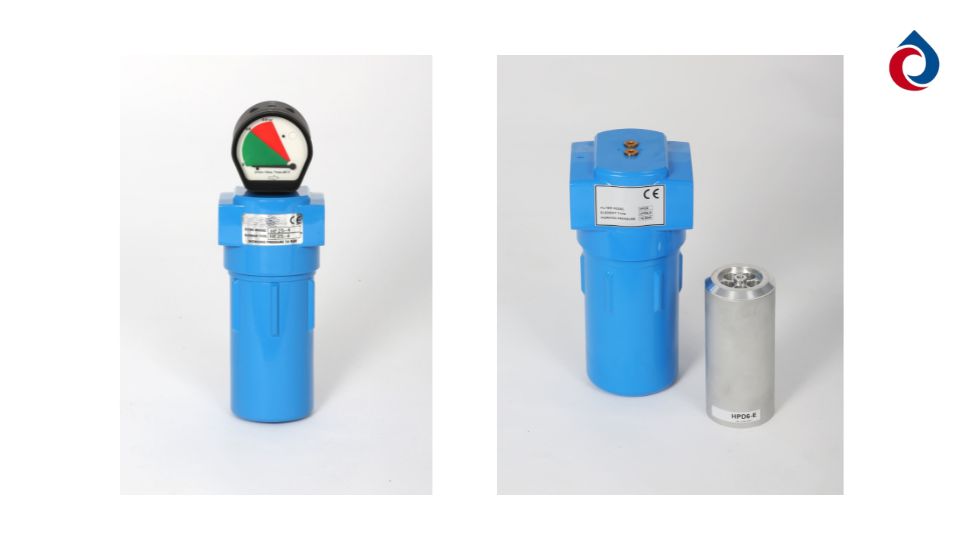
- Canister: the simplest and least expensive method is a two-part canister system, with an oil-removal filter followed by a desiccant moisture removal filter. Such a system is a perfect compromise for an irregular air flow such as for a fire sprinkler system.
- In conclusion, we would always strongly recommend air dryers for cold storage areas, and other systems which may be subject to all but occasional freezing. The system we recommend is the very simple, inexpensive, and easy to maintain canister system.
The benefits of our canister system:
- It’s cheap: an initial set-up, including an oil-removal filter with ‘full’ gauge, a dryer, and cartridges, can cost from under £700.
- Installation is as easy as 1-2-3!
- Attach the oil filter gauge to the filter (it is directional);
- Pipe the oil filter in-line after the compressor outlet, with an upstream isolation valve;
- Pipe the air dryer in-line after the oil filter, with a downstream isolation valve, then continue into the sprinkler system.
- When the oil filter gauge indicates ‘full’, it’s cheap, easy and quick to maintain: replacement canister sets are cheap at around £250; hopefully you did put those isolation valves in, so you can then easily unscrew each canister body to replace the cartridges; and it will be a quick 10-minute job.
And, it’s as simple as that!
Why don’t you Contact Us now to see how your cold areas can be better protected?